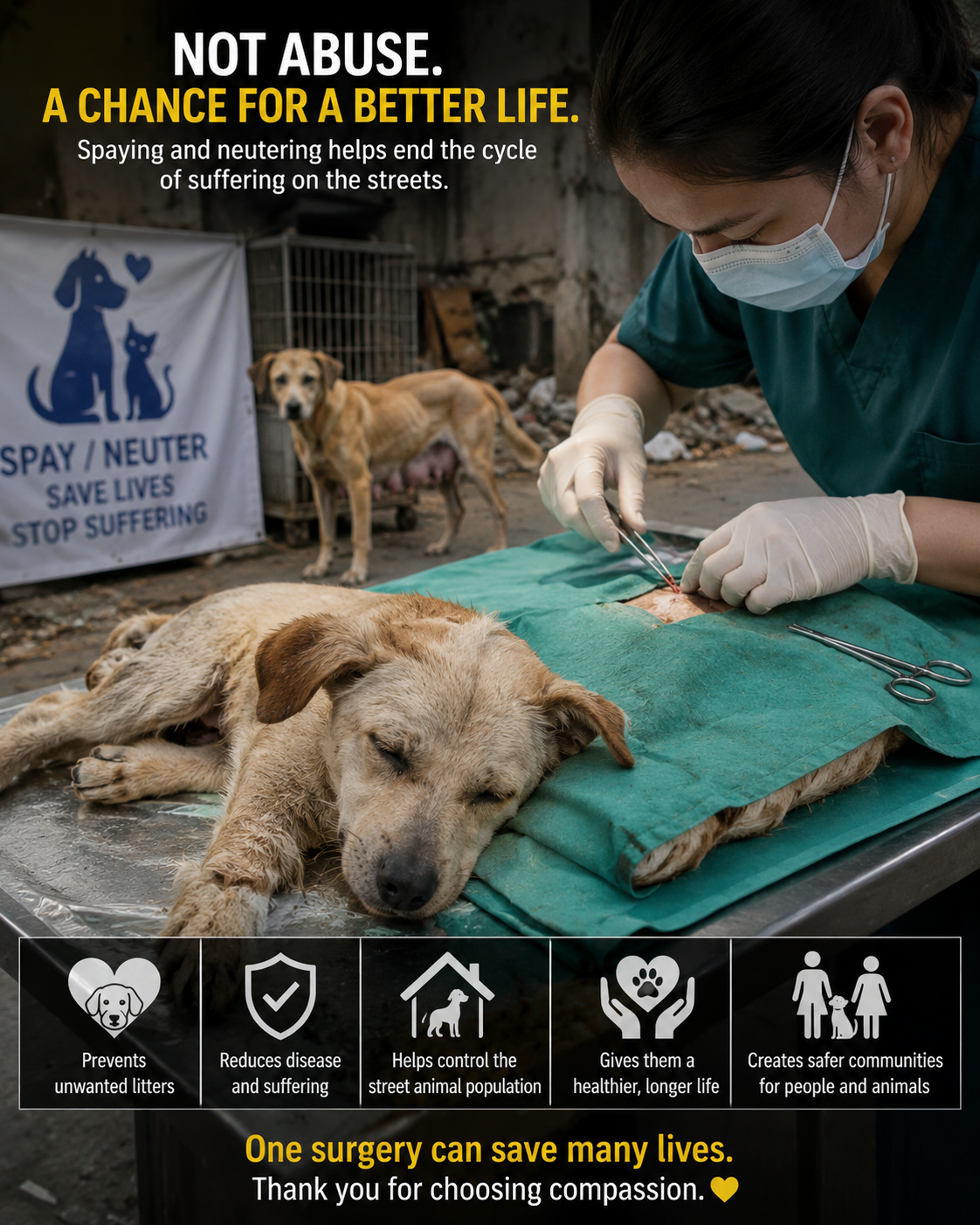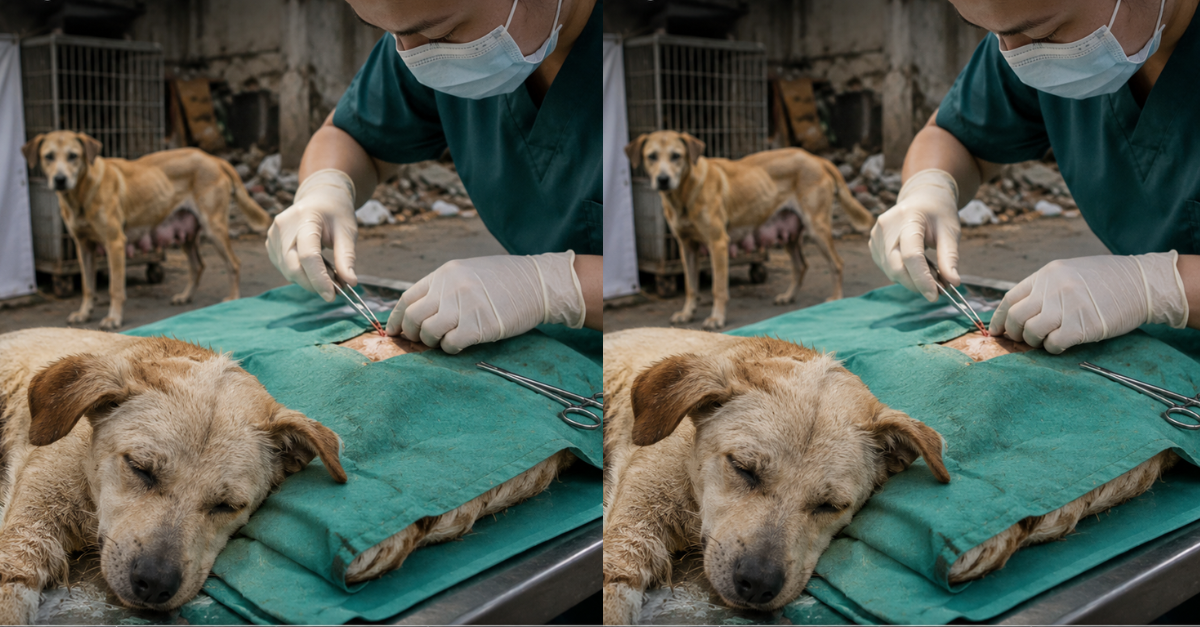
When people see a stray dog being taken in for spay or neuter surgery, many feel sorry for the animal. They see the dog being held, brought into a clinic, resting after the procedure, and they may think it looks cruel.
But the painful truth is much bigger than that moment.
The cruel thing is not spaying or neutering. The cruel thing is allowing more and more animals to be born on the streets, where they face hunger, disease, cold weather, traffic, fear, and a life with almost no protection.
A mother dog living on the street does not give birth in a warm, safe bed. She gives birth under cars, beside trash piles, in wet corners, or behind abandoned buildings. Her puppies open their eyes to dirt, rain, noise, danger, and hunger. Some die before they are strong enough to walk. Some get sick while still too young to fight. Some are hit by vehicles. Some survive only to grow up afraid, hungry, and eventually bring another generation into the same suffering.
That is the real cycle of pain.
Spaying and neutering do not take away a happy future from these animals. They prevent more babies from being born into a world where there may be no food, no medicine, no shelter, and no one to protect them. They give a mother dog the chance to stop being worn down by litter after litter. They help reduce the number of animals left to starve, suffer, be chased away, or die quietly on the streets.
A surgery may cause discomfort for a few days, but a life without spaying or neutering can bring years of suffering. It can mean repeated pregnancies when the body is already weak, giving birth in the rain, trying to protect puppies from traffic and cruelty, and watching them become sick or disappear one by one.
If we truly care about these animals, we cannot only feel sorry for them during the short recovery after surgery. We also have to care about the long life ahead of them, and about the many unborn puppies who would otherwise enter the same painful cycle with no guarantee of survival.
When done properly by a veterinarian, with pain control, aftercare, health monitoring, and a safe return or adoption plan, spaying and neutering are not abuse. They are responsibility. They are compassion with a long-term purpose.
Compassion is not only giving one meal and walking away. Compassion is also making the difficult but necessary choice that prevents more suffering tomorrow. A spayed female dog on the street no longer has to give birth while starving. A future litter will not have to die from hunger, disease, cold, or neglect before ever knowing what safety feels like.
What we need is not to judge spaying and neutering only by the emotional image of an animal after surgery. We need to look at the reality of street animals: too many are born, too few homes exist, too little care is available, and too many lives end without anyone noticing.
Spaying and neutering do not make these animals less worthy of love. They help stop the suffering from being passed down to the next generation.
So when a stray dog is taken in to be spayed or neutered, it is not a sign of cruelty. It is a chance. A chance for that dog to live the rest of life with less pain. A chance for a mother dog to stop giving birth in exhaustion. A chance for the cycle of hunger, sickness, abandonment, and death on the streets to finally begin ending.
Not abuse.
Not punishment.
But a way to protect them from a future that has already caused too many animals to suffer.